
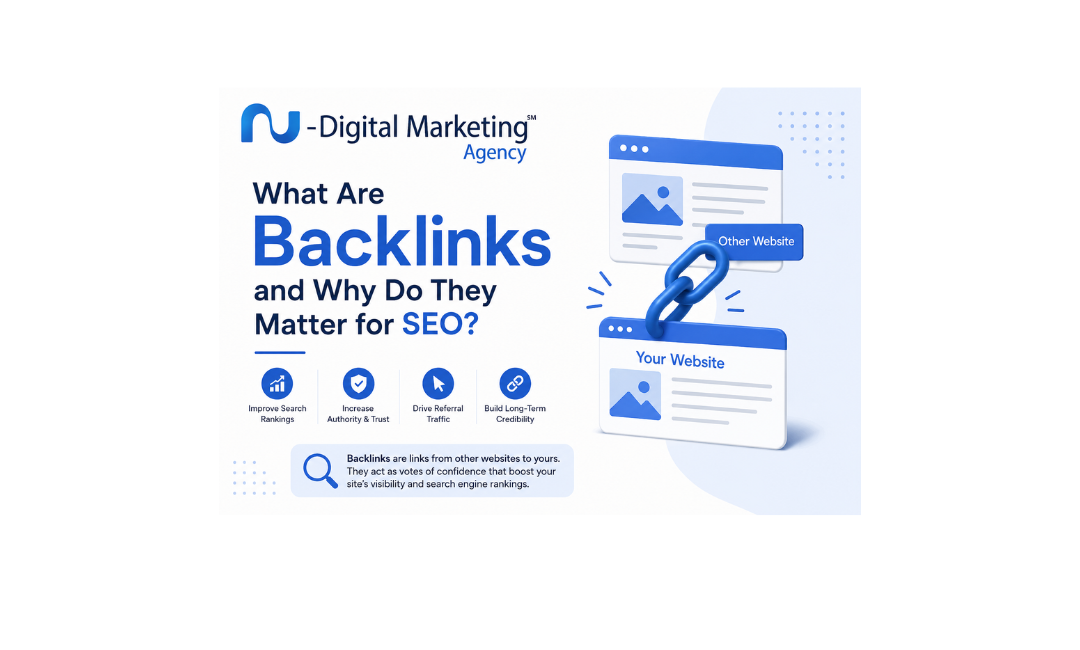
You’re learning about SEO. You keep hearing the word “backlinks.” Someone said they’re important. Someone else said you need to “build links.” But nobody explained what backlinks actually are or why they matter.
Let me fix that right now.
Here’s exactly what are backlinks and why do they matter for your website’s success.
The Short Answer
A backlink is a link from one website to another website. When someone links to your site from theirs, that’s a backlink.
Backlinks matter because Google treats each link as a vote of confidence. More votes from reputable websites tell Google that your site is trustworthy and valuable. Trustworthy sites rank higher.
Understanding what are backlinks and why do they matter starts with understanding how Google decides what to show.
Think of Backlinks as Votes of Confidence
Imagine you’re looking for a good plumber. Two plumbers are recommended to you. One is recommended by your neighbor, your coworker, and your local hardware store. The other is recommended by nobody.
Which plumber would you trust? The one with multiple recommendations from trusted sources, right?
Backlinks work the same way. When a reputable website links to your site, Google sees that as a recommendation. When many reputable websites link to your site, Google sees that as many recommendations. More recommendations = more trust = higher rankings.
That’s the core of what are backlinks and why do they matter. They’re the internet’s version of word-of-mouth referrals.
Not All Backlinks Are Created Equal
Here’s where most beginners get confused. A backlink from a trusted, authoritative website is worth much more than a backlink from a random, low-quality site.
High-quality backlinks come from: Established news websites (CNN, local news stations). Government websites (.gov domains). Educational websites (.edu domains). Industry-leading blogs and publications. Professional associations. Your local Chamber of Commerce. Better Business Bureau.
Low-quality backlinks come from: Random directory sites with no traffic. Spammy blogs with thin content. Link farms (websites created just to sell links). Foreign websites unrelated to your industry. Sites with low domain authority.
One backlink from a local news site is worth more than 1,000 backlinks from spammy directories. Google is smart enough to tell the difference.
That’s why understanding what are backlinks and why do they matter includes knowing that quality matters more than quantity.
How Google Uses Backlinks to Rank Websites
Let me give you a peek behind the curtain. Google’s original search algorithm was called PageRank. It was named after Larry Page, Google’s co-founder. PageRank worked by counting backlinks. More backlinks from important pages meant a page was more important.
Today’s Google is much more sophisticated. But backlinks are still one of the top three ranking factors. Along with relevance and user experience.
Here’s how Google uses backlinks today:
Authority: Google calculates the authority of each website based on who links to it. A site with many quality backlinks has high authority. High authority sites rank better and also pass authority to sites they link to.
Relevance: Google looks at the context of backlinks. If a plumbing blog links to your plumbing website, that’s relevant. If a cooking blog links to your plumbing website, that’s less relevant. Relevant backlinks matter more.
Trust: Backlinks from trusted sources (like .gov and .edu sites) build trust. Backlinks from spammy sources damage trust. Google can penalize sites with many low-quality backlinks.
That’s the technical answer to what are backlinks and why do they matter. They’re how Google measures authority, relevance, and trust.
Why Backlinks Are Especially Important for New Websites
If your website is new, Google doesn’t know you yet. You have no history. No reputation. No track record.
Backlinks are how you build that reputation quickly. When established websites link to your new site, they’re vouching for you. Google sees these votes of confidence and trusts your site faster than it would otherwise.
A new website with zero backlinks might take a year to rank for competitive keywords. The same website with 50 quality backlinks might rank in 3 to 6 months. That’s the power of backlinks.
For small businesses competing against established companies, backlinks level the playing field. You can’t outspend a national brand on ads. But you can out-link them locally.
That’s the strategic importance of what are backlinks and why do they matter for small business owners.
Good Backlinks vs Bad Backlinks
Let me give you clear examples so you know what to pursue and what to avoid.
Good backlinks (pursue these): Link from your local Chamber of Commerce after joining. Link from a local news article about your business. Link from a supplier or partner’s website. Link from an industry association directory. Link from a customer’s blog post reviewing your service. Link from a university resource page (if relevant). Link from a well-known industry blog.
Bad backlinks (avoid these): Links from “pay for link” services. Links from spammy comment sections. Links from foreign gambling or porn sites. Links from article spinning sites. Links from link farms or private blog networks. Links from sites with no traffic or authority.
Bad backlinks can actually hurt your rankings. Google might penalize your site for unnatural link patterns. If you see suspicious links pointing to your site, you can disavow them using Google’s Disavow Tool.
Knowing the difference is part of understanding what are backlinks and why do they matter for your site’s health.
How to Get Good Backlinks for Your Small Business
Now for the practical part. How do you actually earn quality backlinks?
Method #1: Create linkable content. Write something genuinely useful. A guide. A resource list. Original research. Local information. When you create something valuable, people link to it naturally. A blog post titled “The Complete Guide to [Your Service] in [Your City]” is linkable. A basic “About Us” page is not.
Method #2: Get listed in local directories. Join your Chamber of Commerce. Get listed on Better Business Bureau. Find industry-specific directories. Each quality directory listing is a backlink.
Method #3: Partner with local businesses. Cross-promote with complementary businesses. A plumber partners with a real estate agent. A bakery partners with a coffee shop. Ask for a link on their “Partners” or “Resources” page.
Method #4: Get mentioned in local news. Do something newsworthy. Sponsor a little league team. Host a charity event. Launch a unique service. Local news sites are always looking for stories. A news mention includes a backlink.
Method #5: Write guest posts. Offer to write a helpful article for a local blog or industry website. In exchange, you get a backlink in your author bio. Make sure the site is reputable and relevant.
Method #6: Fix broken links. Find broken links on other websites. Suggest your content as a replacement. This is advanced but effective.
These methods answer what are backlinks and why do they matter at a practical level. They show you how to get the links that actually help.
How Many Backlinks Do You Need?
There’s no magic number. It depends on your industry and competition.
For a local service business in a small town, 20 to 50 quality backlinks might be enough to outrank everyone. For a national e-commerce site in a competitive niche, you might need thousands.
The right question isn’t “how many backlinks do I need?” It’s “how many more backlinks do I need than my competitors?”
Research your top competitors. Use a free backlink checker tool (like Ubersuggest or Ahrefs’ free backlink checker). See how many backlinks they have. That’s your target.
If your top competitor has 100 backlinks, you need at least 100. If they have 500, you need 500. Backlinks are competitive. You need to outpace the competition.
That’s the competitive reality of what are backlinks and why do they matter for your specific market.
The Bottom Line
Backlinks are votes of confidence from other websites. Google uses them to measure your site’s authority, relevance, and trust. More quality backlinks = higher rankings. But not all backlinks are equal. One link from a trusted news site is worth more than 1,000 links from spammy directories.
To succeed, create linkable content. Get listed in local directories. Partner with local businesses. Earn news mentions. Write guest posts. Avoid bad backlinks at all costs.
Now you know what are backlinks and why do they matter. Start building quality backlinks today. Your rankings will thank you tomorrow.
